
Multichannel vs Omnichannel Selling: Definitions, Differences, and Strategic Implications
And Why Your Infrastructure Matters
As ecommerce matures, "multichannel" and "omnichannel" get used interchangeably.
Strategically — and operationally — they are not the same thing.
Understanding the difference is critical when designing your operational infrastructure. The wrong foundation can make expansion chaotic instead of scalable.
What Is Multichannel Selling?
Multichannel selling means selling across multiple independent platforms.
Examples include:
- Amazon
- eBay
- Walmart
- Shopify
- TikTok Shop
- B2B portals
- Etsy
- Wayfair
Each channel may operate independently in terms of:
- Promotions and marketing campaigns
- Pricing strategies
- Customer experience and messaging
- Inventory exposure and allocation
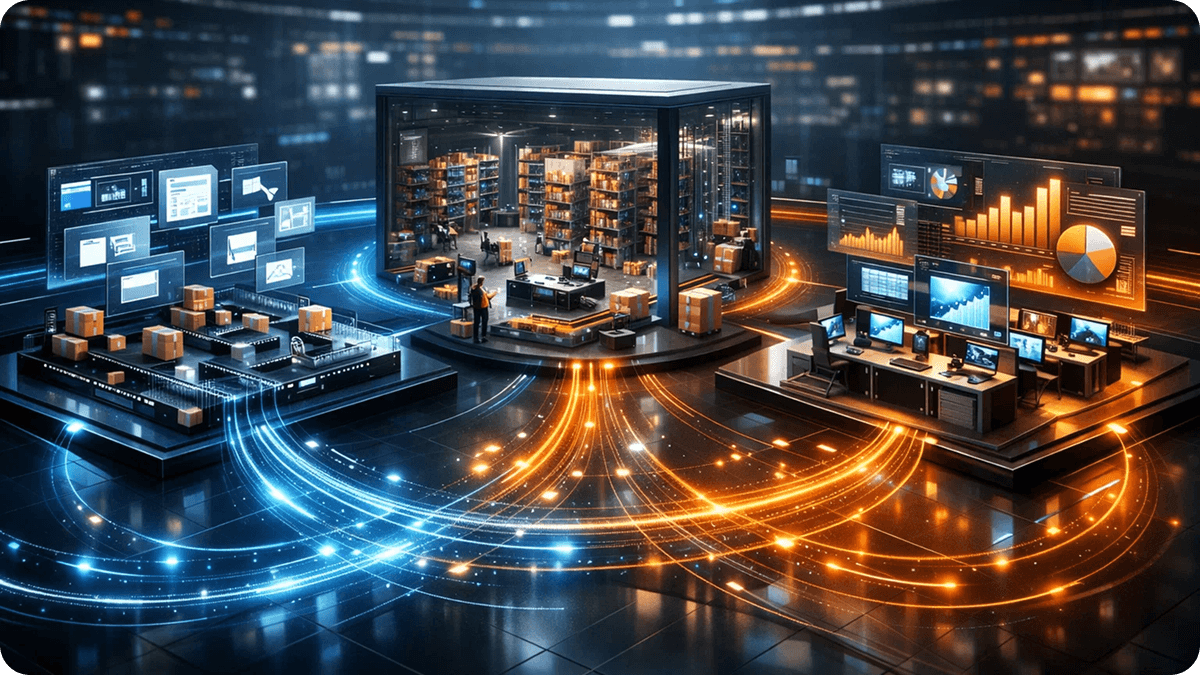
Operationally, multichannel requires strong centralized control to prevent fragmentation.
Modern platforms support multichannel scale through:
- Centralized order capture - All orders flow into one system
- Real-time stock synchronization - Inventory updates across all channels
- Unified product and pricing control - Master catalog management
- Channel-level analytics - Performance tracking per marketplace
Multichannel is about expansion and reach.
You're increasing revenue streams — but keeping backend logic unified.
What Is Omnichannel Selling?
Omnichannel goes further.
It integrates channels into a seamless customer experience.
This means connecting:
- Online and offline inventory
- DTC and marketplace stock
- B2C and B2B fulfillment flows
- Unified returns processes
- Cross-channel order routing
- Single customer view across touchpoints
Examples of Omnichannel Behavior
- Buy online, pick up in store (BOPIS)
- Return marketplace purchases to physical locations
- Shared loyalty programs across all channels
- Unified stock visibility across all touchpoints
- Ship from store for online orders
- Endless aisle - Order out-of-stock items from other locations
Omnichannel requires deeper integration and real-time synchronization across fulfillment points.
Advanced platforms enable omnichannel execution by:
- Centralizing stock across locations
- Applying intelligent routing rules
- Managing returns within a unified inventory system
- Providing consolidated financial visibility
Omnichannel is about cohesion and continuity.
The Key Differences
| Dimension | Multichannel | Omnichannel |
|---|---|---|
| Channel Structure | Independent platforms | Fully integrated experience |
| Inventory Logic | Centralized for accuracy | Centralized + shared visibility across environments |
| Customer Experience | Channel-specific | Unified across all touchpoints |
| Data Flow | Operational consolidation | Real-time system-wide synchronization |
| Complexity | Moderate | High |
| Primary Focus | Revenue expansion | Customer journey integration |
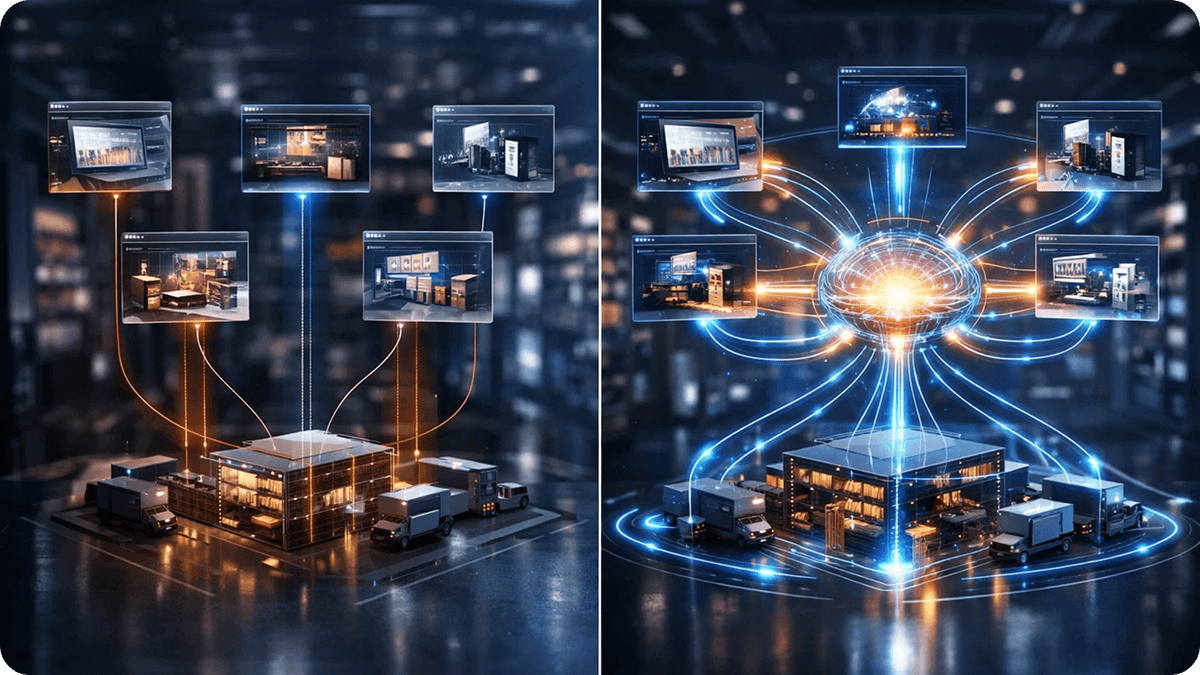
Multichannel focuses on operational control.
Omnichannel combines operational control with customer journey integration.
Operational Challenges in Both Models
1. Inventory Risk
Selling across multiple channels increases overselling risk.
Prevention strategies:
- Real-time stock deduction when orders are placed
- Reservation logic tied to order management
- Multi-warehouse visibility and allocation
- Channel-specific stock buffers
- Safety stock thresholds
Without centralized logic, both multichannel and omnichannel become unstable.
2. Order Routing Complexity
As fulfillment points expand, manual routing becomes inefficient.
Automated routing should consider:
- Warehouse selection based on proximity
- Shipping method assignment by priority
- B2B vs B2C differentiation
- Cross-border routing rules
- Stock availability by location
- Cost optimization
This ensures consistent performance whether operating multichannel or omnichannel.
3. Reporting Fragmentation
If reporting lives in separate systems, decision-making becomes unreliable.
Consolidated reporting should include:
- Channel revenue and sales velocity
- Marketplace fees and commissions
- Shipping costs and SLA performance
- Cost of goods sold (COGS)
- Profitability per channel and SKU
- Return rates by channel
- Customer acquisition costs
Unified reporting is critical for both strategies.
When Multichannel Is Enough
Multichannel is sufficient if:
- ✅ You sell exclusively online
- ✅ Channels operate independently
- ✅ Physical store integration isn't required
- ✅ Your main objective is market expansion
- ✅ Customer experience can vary by channel
In this scenario, a centralized platform acts as the operational backbone that keeps growth stable across marketplaces.
Focus areas for multichannel success:
- Inventory accuracy across channels
- Automated order processing
- Centralized product catalog
- Channel performance analytics
- Streamlined fulfillment
When Omnichannel Becomes Necessary
Omnichannel becomes essential if:
- ✅ You operate physical retail locations
- ✅ You offer click-and-collect (BOPIS)
- ✅ Inventory is shared across online and offline environments
- ✅ Returns must be processed across multiple fulfillment points
- ✅ Customer continuity is a strategic priority
- ✅ You want unified customer data across touchpoints
Here, advanced platforms ensure stock accuracy, routing intelligence, and financial consolidation across all fulfillment channels.
Focus areas for omnichannel success:
- Real-time inventory visibility everywhere
- Cross-channel order routing
- Unified customer profiles
- Flexible fulfillment options
- Integrated returns processing
- Consistent pricing and promotions
Strategic Implications for 2026
In 2026, most growing ecommerce brands begin with multichannel expansion.
As they mature, they move toward omnichannel integration.
The transition depends on infrastructure readiness.
Infrastructure Readiness Checklist
Before attempting omnichannel integration, ensure you have:
- Centralized inventory system
- Real-time order management
- Automated routing capabilities
- Unified customer data
- Integrated shipping workflows
- Consolidated financial reporting
- Scalable technology platform
If orders, inventory, shipping, and reporting are fragmented, omnichannel integration introduces risk.
If centralized within a proper platform, expansion remains controlled.
Common Pitfalls to Avoid
Multichannel Pitfalls
- Inventory fragmentation - Each channel "owns" separate stock
- Manual order processing - No automation across channels
- Disconnected reporting - Can't compare channel performance
- Separate customer databases - No unified view
Omnichannel Pitfalls
- Premature expansion - Moving to omnichannel without multichannel mastery
- Technology limitations - Systems can't handle real-time syncing
- Poor routing logic - Fulfillment decisions not optimized
- Inconsistent customer experience - Different rules per channel
The Technology Foundation
Both multichannel and omnichannel require:
Order Management Layer
- Centralized order capture
- Intelligent routing rules
- Status synchronization
- Exception handling
Inventory Management Layer
- Real-time stock visibility
- Multi-location tracking
- Reservation logic
- Bundle and kit support
Fulfillment Layer
- Warehouse management
- Shipping integration
- Returns processing
- SLA monitoring
Analytics Layer
- Channel performance metrics
- Financial consolidation
- Forecasting and planning
- Customer insights
Evolution Path: Multichannel to Omnichannel
Stage 1: Single Channel Foundation
Build solid operations on your primary channel.
Stage 2: Multichannel Expansion
Add 2-3 additional sales channels with centralized backend.
Stage 3: Multichannel Optimization
Perfect inventory accuracy, routing, and automation.
Stage 4: Physical Integration (If Applicable)
Connect brick-and-mortar locations to online inventory.
Stage 5: Omnichannel Experience
Enable BOPIS, ship-from-store, and unified customer journeys.
Final Perspective
Multichannel expands revenue.
Omnichannel enhances customer continuity.
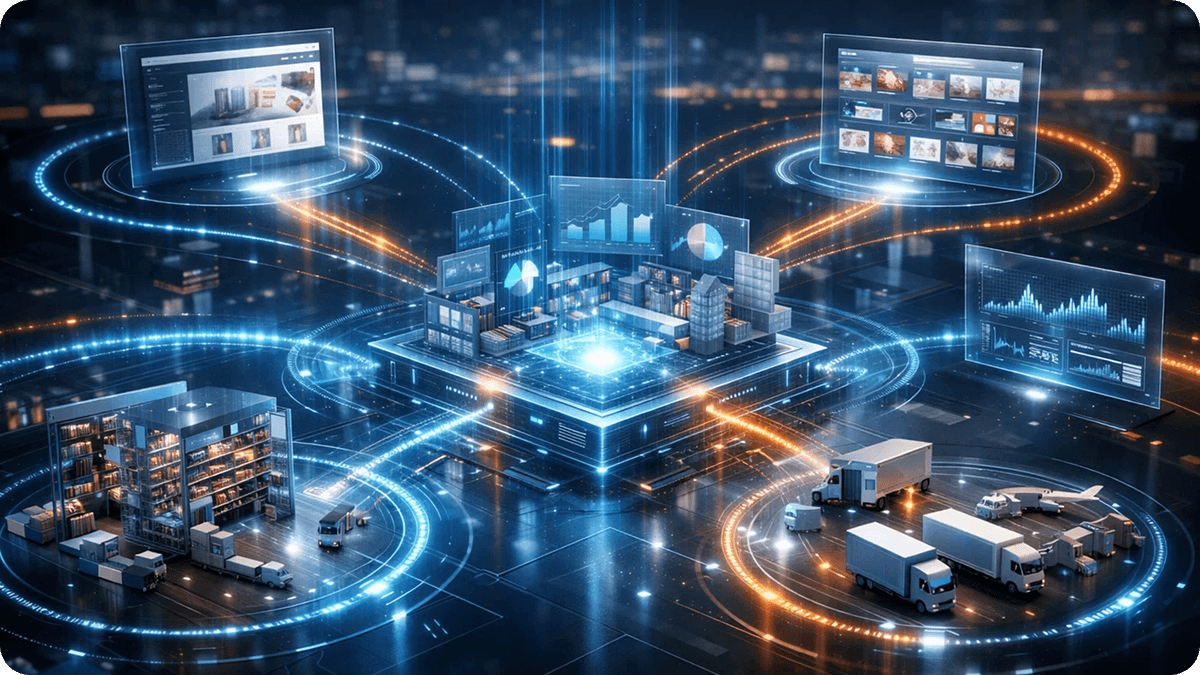
Both require centralized operational infrastructure.
Modern platforms provide the unified system layer that supports:
- Real-time inventory accuracy
- Automated order management
- Multi-warehouse routing
- Integrated shipping workflows
- Consolidated financial reporting
- Predictive insights via AI and forecasting
Without centralized operations, multichannel creates complexity.
With the right infrastructure, it becomes scalable growth.
Key Takeaways
- Multichannel = Multiple independent sales channels with unified backend operations
- Omnichannel = Integrated customer experience across all touchpoints
- Both require centralized inventory, order management, and reporting
- Start multichannel, perfect the operations, then expand to omnichannel
- Infrastructure matters - The wrong foundation makes growth chaotic
- Technology enables both strategies when properly architected
The distinction between multichannel and omnichannel is strategic.
The system behind them must be unified.
Published: February 23, 2026 | Category: Strategy & Growth | Read Time: 8 min